Energy Balance: Intake Versus Expenditure
Understanding the fundamental principles of how your body maintains energy equilibrium through food consumption and daily activities.
Educational content only. No promises of outcomes.
Core Principles of Energy Balance
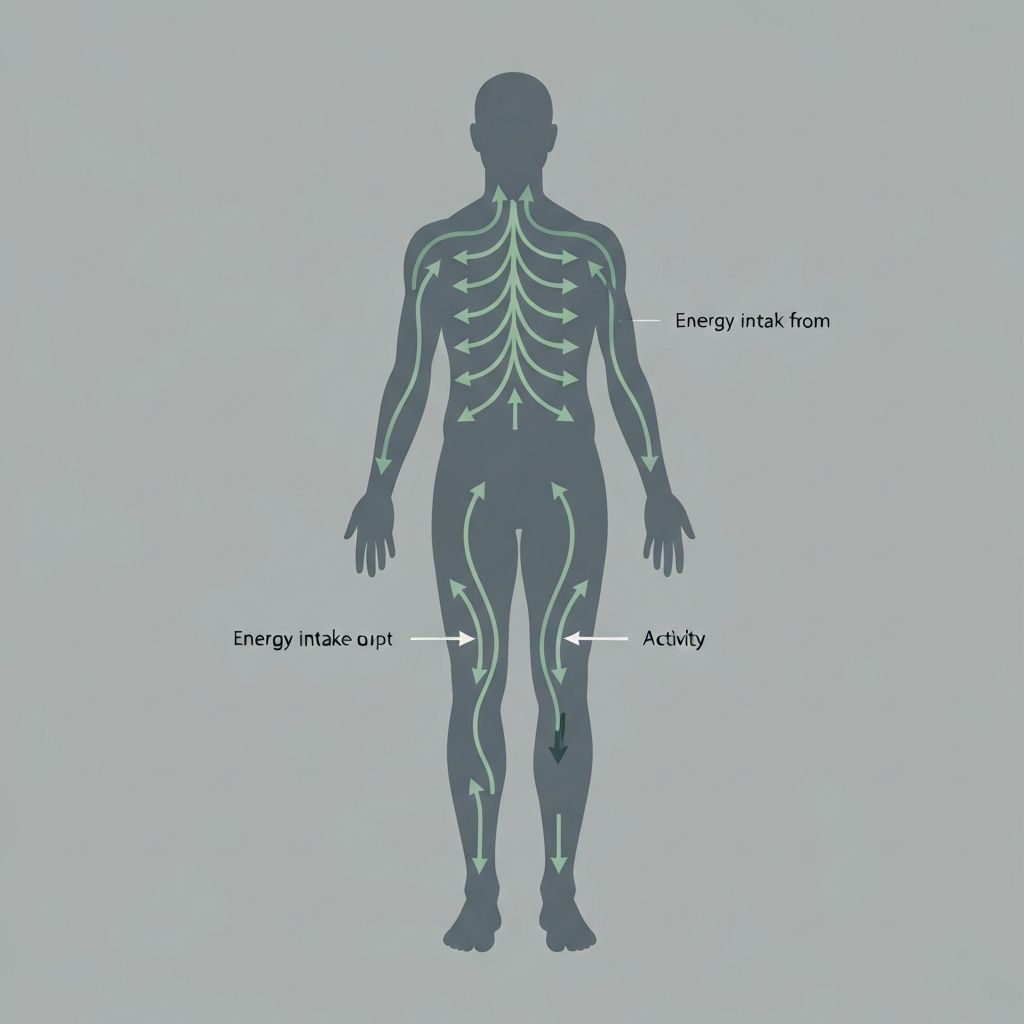
Energy balance is a fundamental concept in human physiology that describes the relationship between the energy you consume through food and the energy your body expends through various activities and metabolic processes. When we consume food, our body receives energy measured in kilocalories (kcal). This energy is then used for maintaining bodily functions, physical movement, and processing food itself.
The principle is straightforward: if energy intake equals energy expenditure, your body weight remains relatively stable. Understanding this concept is crucial for comprehending how weight changes occur and how various factors influence the body's energy dynamics.
Energy intake refers to the calories consumed from food and beverages. This includes all macronutrients—carbohydrates, proteins, and fats—each contributing different amounts of energy. The body digests and processes these nutrients to extract the energy needed for survival and activity.
Energy expenditure encompasses all the ways your body uses energy, from basic metabolic functions like heartbeat and respiration to physical activities and the process of digesting food itself. Together, these components determine your total daily energy expenditure.

Components of Daily Energy Expenditure
Your total daily energy expenditure (TDEE) consists of several distinct components, each contributing differently to your overall calorie burn:
| Component | Description | Approximate Contribution |
|---|---|---|
| Basal Metabolic Rate (BMR) | Energy used for essential functions at rest: breathing, circulation, cell production, nutrient processing | 60-75% of TDEE |
| Non-Exercise Activity Thermogenesis (NEAT) | Energy expended during daily activities: walking, occupational activities, fidgeting, maintaining posture | 15-30% of TDEE |
| Exercise Activity Thermogenesis (EAT) | Energy used during intentional physical exercise and structured workouts | 5-10% of TDEE |
| Thermic Effect of Food (TEF) | Energy required to digest, absorb, and process nutrients from food | 8-15% of TDEE |
Factors Influencing Energy Intake
The amount of energy you consume depends on numerous physiological and environmental factors:
- Hunger and satiety signals: Hormones like ghrelin and leptin regulate appetite and fullness cues, influencing how much you eat at each meal
- Food composition: Different foods have varying energy densities; 100g of broccoli contains far fewer calories than 100g of nuts
- Portion sizes: The volume of food consumed directly affects total energy intake from a meal or day
- Eating frequency: The number of times you eat affects total daily intake patterns, though more frequent eating doesn't necessarily change total intake
- Macronutrient ratio: Combinations of carbohydrates, proteins, and fats influence satiety and energy content of meals
- Environmental factors: Food availability, social settings, time of day, and stress levels all influence consumption patterns
- Individual preferences: Personal food preferences and cultural dietary patterns shape what and how much people eat
- Emotional state: Mood, stress, boredom, and other emotional factors can influence eating behaviours
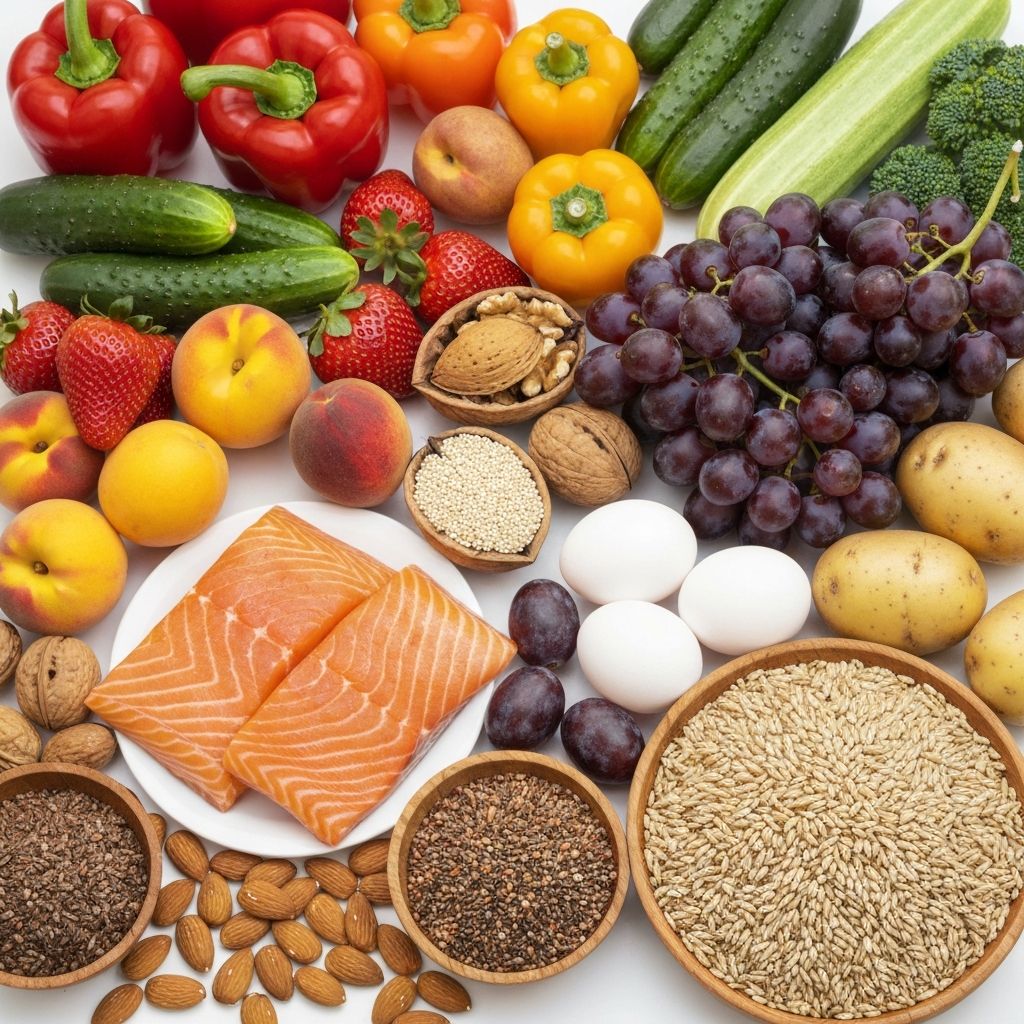
Understanding these factors helps explain why people have different eating patterns and why energy intake varies significantly between individuals. None of these factors operates in isolation—they interact with each other to determine total daily energy consumption.
Common Misconceptions about Calories
Despite widespread discussion about calories, numerous misconceptions persist about how they work:
- All calories are identical: While kilocalories are a standard unit of energy measurement, the physiological effects of consuming 100 kcal from protein versus 100 kcal from fat differ due to different thermic effects and satiety responses
- Eating after a certain time increases weight gain: The time of eating is less significant than total daily intake; metabolism doesn't stop after a particular hour
- Skipping meals accelerates weight loss: Skipping meals can lead to compensatory overeating later and provides no metabolic advantage
- Carbohydrates are inherently fattening: Carbohydrates provide 4 kcal per gram, the same as protein; weight changes depend on total intake relative to expenditure
- Metabolism dramatically slows with age: While BMR does decrease slightly with age, this is partly due to changes in body composition; metabolic adaptation is gradual
- Certain foods have negative calories: No food requires more energy to digest than it provides; the thermic effect of food never exceeds the energy content of the food itself
- Exercise alone can overcome excessive intake: While physical activity is important for health, energy balance ultimately depends on the relationship between total intake and total expenditure
- Metabolism is fixed and unchangeable: While BMR varies between individuals due to genetic and physiological factors, it can change with alterations in activity level and body composition
Historical Milestones in Energy Balance Research
The scientific understanding of energy balance developed over centuries through careful observation and experimentation:
Scientists conducted early experiments measuring heat production in animals, establishing that living organisms produce energy and heat, laying the foundation for understanding metabolism
Research demonstrated that energy is neither created nor destroyed but transformed, a principle fundamental to understanding energy balance in living organisms
Wilbur Atwater developed precise methods for measuring energy content of foods, establishing the caloric values still used today: 4 kcal per gram for protein and carbohydrates, 9 kcal per gram for fat
Systematic studies established methods for measuring basal metabolic rate, the energy expended at rest, recognising it as a key component of total energy expenditure
Development of indirect calorimetry methods allowed researchers to measure energy expenditure in living humans with greater accuracy by measuring oxygen consumption and carbon dioxide production
Contemporary research explores how genetic factors, hormones, gut microbiota, sleep, stress, and environmental factors influence energy balance beyond simple caloric calculations

This historical perspective demonstrates how scientific understanding of energy balance evolved from early heat measurements to sophisticated modern research exploring the complex physiological systems regulating energy intake and expenditure.
Examples of Energy Content in Everyday Foods
Different foods contain vastly different amounts of energy in the same weight. This table illustrates the variation:
| Food | Energy per 100g (kcal) | Primary Macronutrient |
|---|---|---|
| Broccoli, raw | 34 | Carbohydrate |
| Apple, raw | 52 | Carbohydrate |
| Brown rice, cooked | 111 | Carbohydrate |
| Chicken breast, cooked | 165 | Protein |
| Salmon, cooked | 208 | Protein + Fat |
| Almond butter | 588 | Fat |
| Olive oil | 884 | Fat |
This variation in energy density explains why foods like oils and nuts provide significantly more energy in smaller volumes compared to vegetables and fruits. Understanding these differences helps illustrate why food composition, not just quantity, influences the energy content of meals.
Physical Activity Categories and Approximate Energy Cost
Physical activities expend energy at different rates depending on intensity and duration. Here is a general classification:
- Sedentary activities: Sitting, reading, working at a desk—minimal additional energy expenditure beyond BMR
- Light intensity: Slow walking, gentle stretching, light household tasks—approximately 1.5-2 times BMR
- Moderate intensity: Brisk walking, recreational activities, occupational labour—approximately 3-4 times BMR
- Vigorous intensity: Running, cycling, competitive sports—approximately 6-8 times BMR
- Very vigorous intensity: High-intensity interval training, intense competitive activities—can exceed 10 times BMR
The actual energy cost of any activity varies based on individual factors: body composition, fitness level, age, genetics, and environmental conditions all influence how much energy an activity requires. A person weighing 80 kg will expend more energy doing the same activity as a person weighing 60 kg.
Role of Macronutrients in Energy Provision
The three macronutrients provide energy but differ in their roles, energy content, and effects on satiety:
Carbohydrates
Provide 4 kcal per gram and serve as a primary energy source for the brain and muscles. They're found in grains, fruits, vegetables, and legumes. The thermic effect of carbohydrates is approximately 5-10% of calories consumed.
Proteins
Provide 4 kcal per gram and serve structural and functional roles in the body beyond energy provision. Sources include meat, fish, eggs, dairy, legumes, and nuts. Proteins have a thermic effect of 20-30%, meaning significant energy is required for digestion and processing.
Fats
Provide 9 kcal per gram and serve essential roles in hormone production and nutrient absorption. Found in oils, nuts, seeds, fatty fish, and animal products. The thermic effect of fats is approximately 0-3%, the lowest among macronutrients.
These macronutrient differences help explain why foods with different compositions can have similar energy content but produce different physiological responses regarding satiety and metabolic processing.
Explore In-Depth Articles
For comprehensive explanations of specific aspects of energy balance, read our detailed articles:
What Is Basal Metabolic Rate and How Is It Determined?
Understand the science behind BMR, the factors influencing it, and historical methods of measurement.
Read the full explanationThermic Effect of Food: How Digestion Uses Energy
Explore how your body expends energy digesting different macronutrients and the biochemical processes involved.
Read the full explanationNon-Exercise Activity Thermogenesis (NEAT) Explained
Learn about NEAT and how everyday activities contribute significantly to total daily energy expenditure.
Read the full explanationUnderstanding Energy Density of Foods
Discover how food composition affects energy density and the implications for food volume and intake.
Read the full explanationHow Physical Activity Level Affects Total Energy Expenditure
Examine the relationship between activity levels and energy expenditure, with approximate values and variability factors.
Read the full explanationEnergy Balance Over Time: Short-term vs Long-term Patterns
Understand how energy balance operates across different time periods and adaptive mechanisms in the body.
Read the full explanationFrequently Asked Questions about Energy Balance
In scientific contexts, a calorie (small c) is a unit of energy equal to the amount needed to raise 1 gram of water by 1°C. A kilocalorie (kcal) equals 1,000 calories. In nutrition and common usage, "calories" typically refers to kilocalories. Food labels and nutritional data use kcal or "Calories" (capital C) to denote kilocalories.
BMR does change throughout life. It generally increases during childhood and adolescence, peaks in early adulthood, and gradually decreases with age. This decline is partly due to decreased physical activity and changes in body composition (muscle mass decreases, fat mass increases), as muscle tissue is more metabolically active than fat tissue.
While baseline metabolism varies between individuals, certain factors can influence it. Increased muscle mass raises BMR slightly, as muscle tissue requires more energy at rest. Regular physical activity, particularly resistance training, can help maintain or build muscle. However, the magnitude of metabolic change through lifestyle modifications is modest—total daily energy expenditure is more significantly influenced by activity levels.
The thermic effect of food accounts for approximately 8-15% of total daily energy expenditure. This varies based on the macronutrient composition of foods consumed, with protein requiring more energy to digest than carbohydrates or fats. This is why protein-containing meals may slightly increase energy expenditure compared to meals with the same calories from other macronutrients.
Body weight changes are ultimately determined by the difference between energy intake and energy expenditure. However, the physiological factors regulating intake and expenditure are complex and influenced by hormones, genetics, environmental factors, food composition, and behavioural patterns. Understanding energy balance provides a framework, but individual responses vary considerably.
Precise measurement of personal energy expenditure requires laboratory equipment like indirect calorimetry. However, equations have been developed to estimate BMR and total energy expenditure based on age, sex, weight, height, and activity level. These estimates are helpful for general understanding but are less accurate for individuals than laboratory measurements.
Yes. The energy cost of any physical activity varies between individuals based on body composition, fitness level, age, genetics, and environmental factors. A heavier person generally expends more energy doing the same activity as a lighter person. Someone with more muscle mass may have different expenditure than someone with less muscle at the same body weight.
Body composition—the ratio of muscle to fat—influences energy expenditure. Muscle tissue is more metabolically active than fat tissue, requiring more energy at rest. Therefore, someone with more muscle mass typically has a higher BMR than someone of the same weight with more fat mass. Changes in body composition affect both energy expenditure and how energy balance manifests as body weight changes.
Explore More Concepts
Understanding energy balance provides a foundation for comprehending numerous aspects of human physiology and health. Visit our articles section to explore related concepts in greater depth and discover how these principles apply to various situations and populations.
Educational content only. No promises of outcomes.